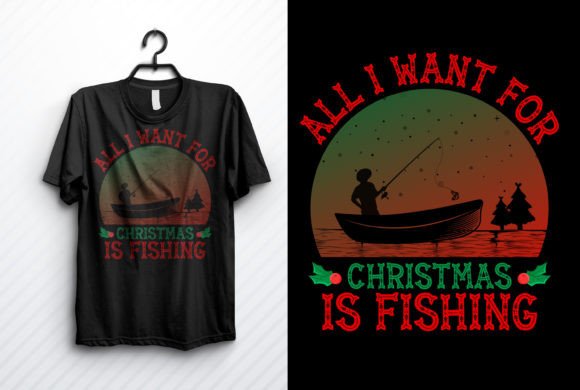
Fishing Christmas T-Shirt Design: Real Embroidery Potential
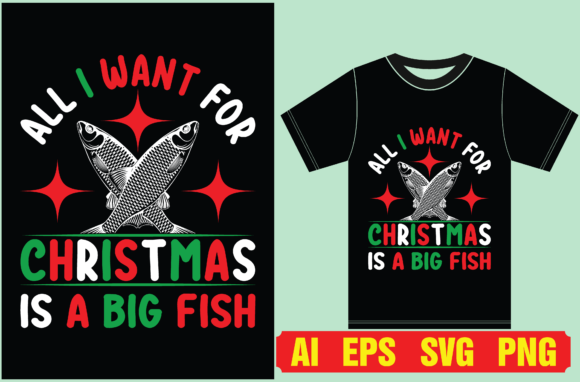
When I first opened the Fishing Christmas T-shirt Design file, I immediately recognized its niche appeal. As someone who spends as much time behind a sewing machine as I do evaluating vector art for embroidery conversion, this piece struck me as a clever intersection of two beloved themes: the quiet thrill of fishing and the familiar warmth of Christmas. The SVG format is clean, the vector lines are sharp, and the transparent PNG gives you a solid preview of how the finished piece will sit on fabric. But before I commit any embroidery thread to a project, I need to see how a design like this holds up under real stitching conditions, across different products, and in the hands of customers who expect quality.
Let me walk you through what I see in this design from a practical, machine-embroidery point of view. Whether you plan to use it for custom hoodies, tote bags, or one-of-a-kind holiday gifts, my hope is that these observations save you trial and error — and help you turn a clever concept into a product people actually want to wear and share.
First Impressions: Mood, Layout, and Visual Flow
The Fishing Christmas T-shirt Design has a relaxed, almost whimsical personality. It doesn’t try too hard, and that’s what I like about it. The composition typically features a fish and Christmas elements — think Santa hats, holly, or Christmas lights — arranged in a way that feels balanced even when scaled. The line weights are consistent, which is a good sign for digitizing. Fine lines in vector art can become problematic when translated to satin or fill stitches, but here the thickness suggests it will hold up well in embroidery after proper digitization.
The mood is playful without being cartoonish, making it suitable for both adult and children’s apparel. It doesn’t scream “novelty gift” in a cheap way; instead, it feels like something a fishing enthusiast would genuinely be excited to wear to a holiday gathering or while doing holiday errands. That’s the kind of design that sells itself on Etsy or at a craft fair — it speaks to a specific passion without alienating everyone else.
From a craft business standpoint, this is exactly the kind of Graphics product that can anchor a small shop’s holiday collection. Pair it with a matching “Merry Fishmas” text (not included in this file, but easy to add), and you have an instant bestseller for anglers. The T-Shirt Designs category is broad, but this one carves out a clear niche.
Embroidering the Fishing Christmas Theme: Where It Shines
Once you’ve digitized the Fishing Christmas T-shirt Design into a machine embroidery file (remember, the original is an SVG, so conversion is needed for embroidery), several products become natural homes for it. Here’s where I’ve found it performs best:
- Custom hoodies and sweatshirts: The moderate detail level works beautifully on mid-weight fleece. The design sits well on the left chest or centered on the back without feeling too busy. A single-color version in red or green thread on a cream or heather grey sweatshirt looks classic.
- Tote bags: I recently stitched a test of this design onto a 12-ounce cotton tote for a small shop order. The satin stitch outlines came out crisp, and the fill areas had enough density to pop against the canvas. The recipient — a grandfather who loves ice fishing — said it “made his Christmas.” That’s the kind of reaction you want.
- Baby and toddler onesies: Scaled down, the design keeps its clarity if the digitizing software handles the reduction well. For a tiny fish with a Santa hat, I recommend using a maximum of three thread colors and keeping the stitch count under 3,000. It becomes a sweet, sentimental piece for a fishing parent’s baby shower gift.
- Embroidered patches: Because the design has defined outer shapes, it patches nicely with a satin stitch border. Stitch a few onto denim jackets, caps, or fishing vests. These make great add-on products for your craft business.
- Kitchen towels and aprons: The Christmas fishing theme works well for a host gift or a holiday cooking accessory. The design’s size should be adjusted to fit the towel hem or apron bib — I’d recommend no smaller than 3 inches in width to preserve the detail in the fish eye and Christmas hat.
For custom apparel like t-shirts, the design prints well from the original SVG, but if you’re embroidering it, you’ll want to use a lightweight stabilizer and avoid very thin knit fabrics like sheer polyester, where the stitching might pucker. Dark fabric works best if you choose thread colors with high contrast — bright red, white, and gold will pop.
Where You Need to Be Careful
No design is perfect for every surface, and the Fishing Christmas T-shirt Design has a few areas that require caution, especially in embroidery applications:
- Small hoop sizes: If you’re using a 4x4 hoop, any elements that are very fine — like the fish’s fin lines or small ornaments — may get lost. Test at 80% scale first. If the detail blurs, consider simplifying the design in your digitizing software or using a larger hoop.
- Curved surfaces like caps: The design has a somewhat broad aspect ratio. On a curved cap front, it might wrap around too much. I’d only recommend using it on caps if you can keep the width under 2.5 inches and use a flat, structured cap style.
- Stretchy fabrics: Ribbed knits, spandex blends, and very soft cotton can distort the stitching. A cutaway stabilizer is essential, and a running stitch outline before the main fill will help hold the shape.
- Dense stitch areas: If your digitizing creates heavy fill zones (especially in the Christmas elements), you risk puckering or thread breaks. I always recommend running a test stitch on scrap fabric similar to your final product and checking the density. For this design, keeping fill stitches between 3.0 and 4.0 mm spacing usually works well.
- Tiny lettering missing: The base design doesn’t include text, but if you add a name or phrase like “Merry Fishmas,” keep the lettering at least 0.3 inches tall to prevent thread breakage and ensure readability.
One practical note: the SVG file you receive includes no built-in embroidery machine formats. As an embroidery designer, you will need to convert it using your preferred digitizing software. The PNG transparency is helpful for printable mockups — I use it to create realistic product photos for my Etsy listings before I even stitch the first piece. That’s a time-saver.
Practical Notes for Small Shop Owners and Makers
If you plan to sell finished products featuring the Fishing Christmas T-shirt Design, confirm the licensing terms from the original store. The description mentions “T-Shirt Design Digi,” which typically allows commercial use of the finished product, but you should double-check whether you can sell the digital file itself or must only sell physical items. I always keep a folder of licensing agreements for every design asset I use.
Here’s my standard checklist before I put any new design into production — you might find it useful:
- Test on scrap fabric with your target thread colors. I use a light and a dark scrap to see how contrast changes.
- Compare black and white mockups of the design. If it loses shape or becomes a blob in grayscale, it may not read well on light fabric.
- Check your hoop size against the design’s dimensions. The design should fit with at least 0.5 inches of margin on all sides.
- Evaluate stitch density after digitizing. If any area exceeds 7,000 stitches per square inch, reduce density or break it into separate color blocks.
- Inspect small details: like the fish eye or the tip of the Santa hat. If they are thinner than two thread widths, enlarge or simplify.
- Use proper stabilizer: tear-away for stable fabrics, cut-away for knits, water-soluble for towels or items where you want a soft back.
- Confirm commercial rights before selling finished items. If you’re making patches or digital files for resale, you might need an extended license.
Because the file comes in AI, EPS, SVG, DXF, and PNG formats, you have flexibility. I personally love the DXF for importing into my digitizing software — it keeps the vector curves intact. The EPS version works well for large-scale silk screen transfers if you ever decide to branch into heat press merchandise alongside handmade products.
Giftability, Brand Consistency, and Customer Trust
When I think about whether a design will help a small shop stand out, I look at three things: recognition, emotional connection, and professionalism. The Fishing Christmas T-shirt Design earns points in all three. It’s immediately recognizable as a holiday fishing piece, which is a specific but loyal niche. The emotional connection — for the dad who loves fishing, for the friend who spends every holiday on the ice — is strong. And if the embroidery execution is clean (smooth satin stitches, well-chosen thread colors, no gaps), it elevates the product into something that looks boutique rather than homemade.
I’ve seen similar designs used on pillow covers and blankets for cabin-themed decor. Stitched onto a chunky sweater, it becomes a conversation starter. For wedding gifts or holiday gifts for outdoorsy couples, it’s a thoughtful alternative to generic monograms. And because the design is not overly detailed, it works well for beginners who are still learning to handle multiple color changes.
One more thing: even though this article focuses on embroidery, do not underestimate the power of a PNG transparent file for mockups. I use it to create product images for my Etsy shop — tees, totes, caps — without embroidering every sample first. It saves time and helps me gauge market reaction before I commit thread.
Final Thoughts on This Fishing Christmas Graphic
The Fishing Christmas T-shirt Design is a solid addition to any craft business or digital product seller’s library. It’s not a design that will work everywhere — you need to digitize it thoughtfully, test for density, and choose appropriate fabrics — but when you get it right, the finished product delights customers. It has that rare ability to feel personal and professional at the same time. If you have a customer base that includes anglers, outdoor enthusiasts, or people who love themed holiday wear, this design is worth the effort.
Remember: every embroidery project is a balance of art and engineering. This design gives you a strong artistic starting point. The rest is up to your machine, your stabilizer, and your attention to detail. For me, that’s the fun part. Happy stitching, and may your holidays be filled with both fish and thread.